
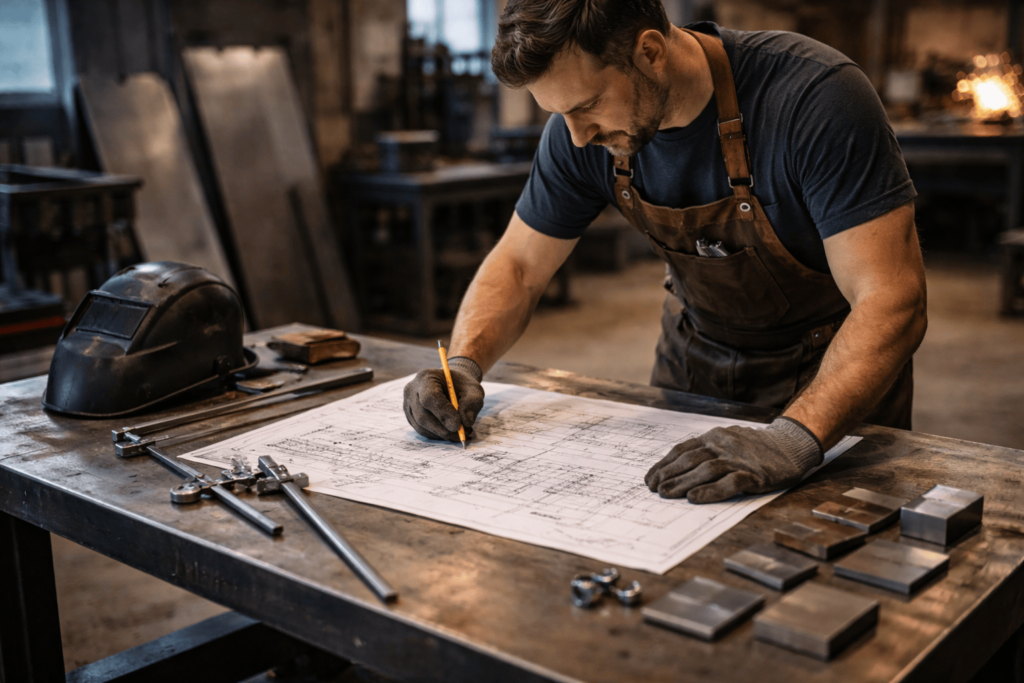
A stunning wrought iron gate, a sculptural steel staircase railing, a precision-welded commercial storefront — behind every impressive metal fabrication project is a planning phase that determined whether the result was extraordinary or an expensive disappointment. Custom metalwork planning is the discipline of translating a creative vision into a buildable, budgetable, code-compliant reality, and skipping or rushing it is the single most common reason projects go over budget, miss deadlines, or end up looking nothing like what the client imagined. Whether you’re a homeowner designing a one-of-a-kind balcony railing, an architect specifying ornamental ironwork for a heritage restoration, or a business owner commissioning branded metal signage, the decisions you make before any cutting, welding, or finishing begins will shape every dollar you spend and every detail you see in the finished product.
This guide walks through the complete planning process — from initial concept development through material selection, fabricator vetting, budgeting, timeline management, and installation coordination — so your project arrives exactly the way you envisioned it.
Why Planning Is the Most Valuable Phase of Any Metalwork Project
Metal is unforgiving. Unlike wood, which can be sanded, patched, and reworked with relative ease, a mistake in steel, aluminum, or wrought iron often means scrapping the piece and starting over. A misplaced weld on a decorative railing can’t be erased. A gate panel cut two inches short can’t be stretched. A powder coat applied over improperly prepped steel will blister and peel within months.
Every one of these failures traces back to the planning stage. Dimensions that weren’t verified on-site. Material grades that weren’t specified clearly. Finish expectations that were assumed rather than documented. The investment you make in thorough upfront planning pays for itself many times over by eliminating rework, change orders, and the gut-wrenching moment when a finished piece doesn’t fit the opening it was built for.
Step 1: Define the Purpose and Scope
Before you think about materials or aesthetics, clarify what the metalwork needs to accomplish. This sounds obvious, but it’s where miscommunication takes root.
Functional requirements come first. Is the piece structural — bearing weight, resisting wind loads, meeting building codes? Or is it purely decorative? A decorative garden trellis and a load-bearing mezzanine bracket may both be “custom metalwork,” but they exist in entirely different engineering universes. Structural work requires stamped engineering drawings in most jurisdictions, which adds time and cost to the project.
Aesthetic intent comes next. Are you aiming for industrial minimalism with raw steel and exposed welds, or refined elegance with scrollwork and a hand-rubbed patina? Do you want the metalwork to be the visual centerpiece of the space or a subtle complement to other materials like stone, glass, or wood? Collecting reference images — from architectural magazines, Pinterest boards, competitors’ properties, or the fabricator’s own portfolio — is one of the most effective ways to align expectations early and avoid the vague, open-ended briefs that lead to costly revisions later.
Environmental context rounds out the scope. Will the piece live indoors or outdoors? In a coastal climate with salt air or a dry inland environment? Exposed to foot traffic, vehicle impact, or harsh chemicals? These conditions directly dictate material choice, finish systems, and long-term maintenance requirements.
Step 2: Choose the Right Metal for the Job
Material selection is where aesthetics, performance, and budget intersect. Each metal brings a distinct set of properties, and choosing the wrong one creates problems that no amount of skilled fabrication can fix.
Mild Steel (Carbon Steel)
The most widely used metal in custom fabrication. Mild steel is affordable, easy to weld, and incredibly versatile — it can be bent, forged, rolled, and machined into virtually any shape. It’s the go-to choice for railings, gates, structural brackets, furniture frames, and decorative panels. The tradeoff is corrosion: bare mild steel rusts quickly when exposed to moisture. Proper finishing — galvanizing, powder coating, or paint systems — is non-negotiable for any outdoor application.
Stainless Steel
Valued for its corrosion resistance, hygienic surface, and sleek modern appearance. Common grades include 304 (general purpose, suitable for most indoor and outdoor applications) and 316 (marine grade, recommended for coastal environments, pools, and food processing). Stainless costs significantly more than mild steel — typically two to three times the material price — and requires specialized welding techniques to avoid discoloration and warping.
Aluminum
Lightweight, naturally corrosion-resistant, and easy to work with. Aluminum is an excellent choice for applications where weight matters — overhead signage, canopy structures, lightweight gates, and marine hardware. It accepts anodizing and powder coating well. However, aluminum is softer than steel, less rigid at equivalent thicknesses, and not suitable for high-strength structural applications without careful engineering.
Wrought Iron
Traditionally the material of choice for ornamental gates, fences, and architectural details. True wrought iron is rarely produced today; most “wrought iron” work is actually fabricated from mild steel shaped to mimic historical ironwork styles. If authenticity matters for a heritage restoration project, discuss this distinction with your fabricator upfront — sourcing genuine wrought iron requires specialty suppliers and adds significant lead time and cost.
Corten (Weathering Steel)
Prized for its distinctive rust-orange patina that develops naturally over time and acts as a protective barrier against further corrosion. Corten is popular in landscape architecture, public art, building facades, and high-end residential features. It requires no painting or coating — the weathered surface is the intended finish. Planning for Corten means accounting for the initial rust runoff during the patina development period, which can stain adjacent concrete, stone, or light-colored surfaces.
Step 3: Find and Vet the Right Fabricator
The fabricator you choose will have more influence over the final quality of your metalwork than any other single decision. Not all metal shops are created equal, and the gap between a general welding shop and a skilled architectural metal fabricator is enormous.
Look at their portfolio first. A shop that specializes in agricultural equipment repair is not the right partner for an ornamental staircase railing, even if they’re technically capable of welding steel. You want a fabricator whose existing body of work demonstrates experience with the style, scale, and precision your project demands.
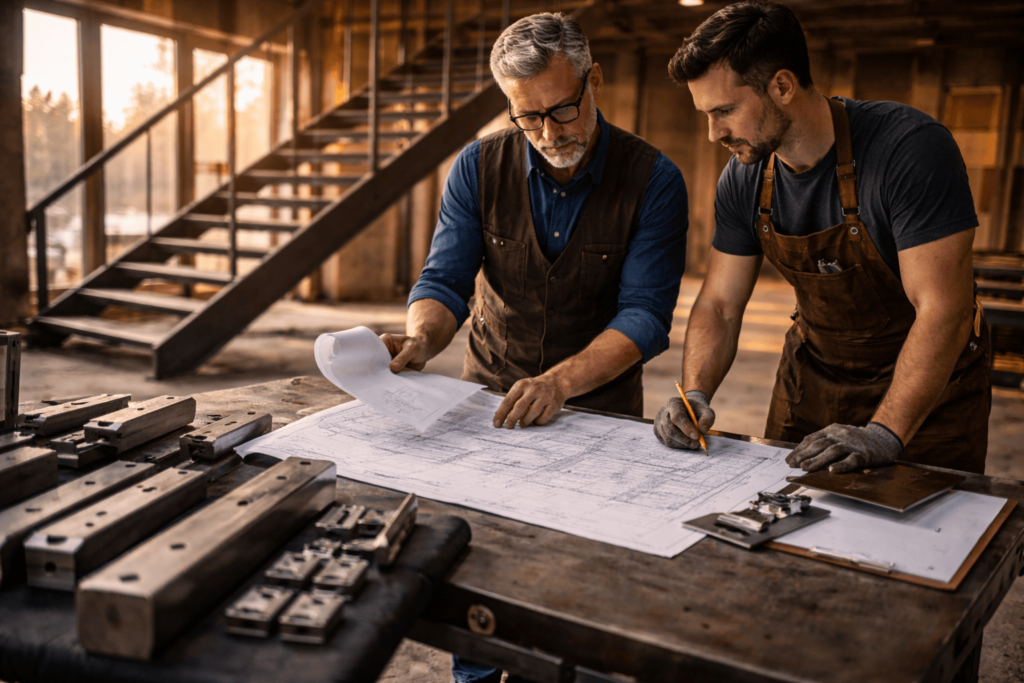
Ask about their process. Professional fabricators will produce shop drawings — detailed fabrication blueprints showing every dimension, joint, connection point, and finish specification — before any material is cut. These drawings are your single most important quality control tool. Review them carefully, ask questions, and don’t approve fabrication until every detail is confirmed.
Verify their capacity and timeline. Custom metalwork shops often run weeks or months behind, especially during peak construction seasons. Ask for a realistic production schedule and build buffer time into your overall project timeline. A fabricator who promises an aggressive turnaround they can’t actually deliver will create cascading delays in every trade that follows.
Check references and visit the shop if possible. Seeing the workspace, meeting the welders, and examining pieces in progress tells you more about quality standards than any website or sales pitch ever will.
Step 4: Set a Realistic Budget
Custom metalwork pricing is driven by four primary factors: material cost, labor hours, finish complexity, and installation difficulty.
Material costs fluctuate with commodity markets. Steel and aluminum prices can swing 15 to 25 percent over the course of a year, so quotes older than 30 to 60 days may no longer be accurate. Ask whether your quote includes a material price lock or an escalation clause.
Labor is typically the largest component of a custom metalwork bid. Intricate scrollwork, complex curves, tight tolerances, and hand-finished details all require more skilled hours at the bench. A simple flat-bar railing system might take a fraction of the shop time that a hand-forged vine motif gate requires — and the pricing will reflect that difference dramatically.
Finishing adds 15 to 30 percent to the project cost depending on the system. A basic single-coat powder finish is the most economical option. Multi-stage finishes — sandblasting, primer, color coat, clear coat — cost more but deliver significantly better durability and appearance. Hot-dip galvanizing is the gold standard for outdoor corrosion protection and adds its own cost layer.
Installation is the factor people most frequently underestimate. Getting a 400-pound gate hung perfectly plumb in a stone pillar opening or a 20-foot railing section lifted and bolted to a second-story balcony requires rigging, specialized hardware, and sometimes crane access. Installation costs can represent 20 to 40 percent of the total project budget for complex pieces.
Step 5: Coordinate the Installation Timeline
Custom metalwork rarely exists in isolation. It connects to concrete foundations, stone columns, wood framing, glass panels, and other architectural elements. The installation sequence matters.
Anchor points and embeds must be set before surrounding concrete is poured or masonry is laid. Mounting surfaces need to be plumb, level, and structurally sound before the metalwork arrives. Finish coats may need to be touched up on-site after installation to address minor handling marks. If your project involves other trades — masons, electricians, painters, general contractors — the metalwork installation needs to be sequenced into the broader construction timeline, not bolted on as an afterthought.
Discuss site readiness requirements with your fabricator well before the delivery date. A finished piece sitting in a warehouse waiting for the job site to be ready costs you storage fees and delays your project completion.
Frequently Asked Questions
How long does a custom metalwork project take from start to finish?
Most residential custom metalwork projects take 4 to 12 weeks from design approval to completed installation. Simple pieces like basic railings or brackets fall on the shorter end. Complex architectural features — ornamental gates, sculptural elements, multi-section staircase systems — may take 12 weeks or longer, especially if engineering review or permitting is required.
How much does custom metalwork cost?
Pricing varies widely based on material, complexity, and scale. Simple mild steel railings might start around $80 to $150 per linear foot installed. Ornamental gates range from $2,000 to $15,000 or more depending on size and detail. Architectural feature pieces and commercial projects are typically quoted on a per-project basis. Always request itemized bids so you understand exactly where your money is going.
What is the best metal for outdoor custom work?
For most outdoor residential and commercial applications, mild steel with hot-dip galvanizing and powder coating offers the best balance of strength, aesthetics, and corrosion protection. In coastal or high-moisture environments, 316 stainless steel or aluminum may be better choices despite higher upfront costs. Corten steel is ideal when a natural weathered patina is the desired aesthetic.
Do I need engineering drawings for custom metalwork?
Structural metalwork — anything that bears loads, serves as a guardrail, or connects to a building’s structural system — typically requires engineered shop drawings stamped by a licensed professional engineer. Purely decorative pieces usually don’t require engineering, but local building codes vary. Your fabricator should be able to advise you on permitting requirements in your area.
What is the difference between wrought iron and steel?
True wrought iron is a historically produced material with a fibrous grain structure and very low carbon content. It is extremely rare and expensive today. The vast majority of modern “wrought iron” work is actually fabricated from mild steel using techniques that replicate the traditional ornamental style. For most projects, mild steel delivers identical visual results at a fraction of the cost.
How do I maintain custom metalwork after installation?
Maintenance depends on the material and finish. Powder-coated steel should be cleaned periodically with mild soap and water and inspected annually for chips or scratches that expose bare metal. Stainless steel benefits from regular cleaning to prevent surface staining, especially in coastal areas. Corten steel is essentially maintenance-free once the protective patina has fully developed. Indoor pieces in climate-controlled environments require minimal care beyond occasional dusting.
Turn Your Vision into Metal — Start Planning Today
You now have the complete roadmap: scope, materials, fabricator selection, budgeting, and installation coordination. Every hour you invest in careful planning saves days of rework, protects your budget from surprise costs, and moves you closer to a finished piece that matches the picture in your head.
Ready to bring your custom metalwork project to life? Connect with our team for a free design consultation. We’ll review your concept, recommend the right materials and approach, provide a detailed quote with no hidden costs, and build you something worth keeping for generations. Your project starts with a conversation — let’s have it.